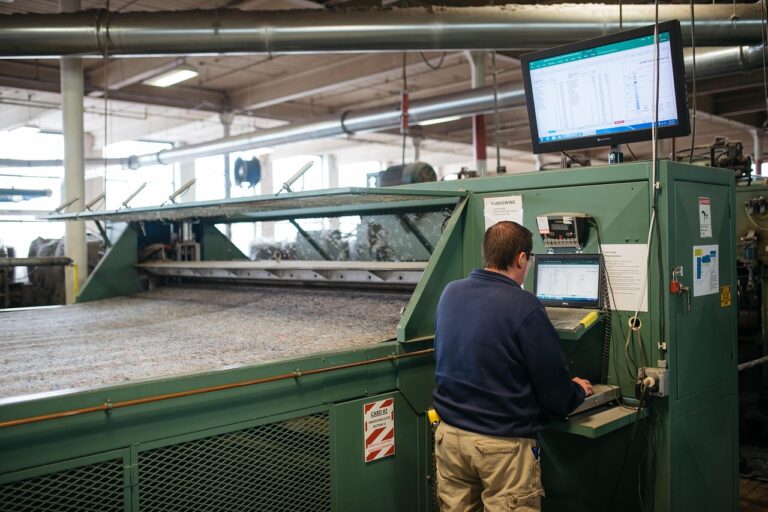
Canada has long been recognized as one of the world’s most welcoming nations for skilled immigrants, and the manufacturing sector stands at the forefront of that openness. As the Canadian economy continues to grow, driven by demand in automotive production, food processing, aerospace, construction materials, and consumer goods, the manufacturing industry faces a persistent and widening labor shortage. Domestic workers alone cannot fill the gap, which is why Canadian employers — backed by government immigration policy — are actively recruiting foreign workers and offering visa sponsorship to those with the right qualifications.
For foreign nationals looking to build a stable career and a new life in North America, manufacturing jobs in Canada represent an exceptional opportunity. These roles offer competitive wages, access to public healthcare, pathways to permanent residency, and in many cases, the chance to bring family members along. This guide provides a thorough overview of the manufacturing job landscape in Canada, the visa and immigration pathways available to foreign applicants, the types of roles in highest demand, what employers look for, how to apply, and what life looks like once you arrive.
Canada’s Manufacturing Sector: An Overview
Canada’s manufacturing industry is a pillar of its national economy, contributing over $174 billion to the country’s GDP and employing more than 1.7 million workers across the country. The sector spans a remarkably diverse range of sub-industries, from automotive assembly plants in Ontario to seafood processing facilities on the East Coast, from timber mills in British Columbia to food packaging operations in Alberta and Quebec.
The provinces of Ontario, Quebec, British Columbia, and Alberta are the most active manufacturing hubs. Ontario alone accounts for roughly 47% of Canada’s total manufacturing output, largely anchored by the auto industry. Cities like Windsor, Oshawa, Cambridge, and Brampton are home to major plants operated by companies such as Toyota, Honda, Ford, and Stellantis, along with hundreds of parts suppliers and subcontractors.
Despite the sector’s size and economic importance, Canadian manufacturers have been struggling with labor shortfalls for over a decade. An aging domestic workforce, low birth rates, and growing competition from other industries for young talent have created persistent vacancies — particularly for semi-skilled and skilled blue-collar positions. The federal government’s response has been to open immigration channels specifically designed to support employers who need workers quickly. This is the environment that makes Canada so attractive for foreign manufacturing job seekers.
Why Canada Sponsors Foreign Workers for Manufacturing Jobs
The logic behind Canada’s willingness to sponsor foreign manufacturing workers is straightforward: the country needs workers, and immigration is the fastest, most reliable way to fill the gap. Statistics Canada has consistently projected that immigration will account for nearly 100% of Canada’s net labor force growth in the coming decades. Without a steady inflow of working-age immigrants, entire sectors of the economy would struggle to function.
Manufacturing employers benefit from visa sponsorship in several key ways. First, it allows them to access a global talent pool, expanding their reach beyond the domestic labor market. Second, many immigrants bring work ethic, technical training, and experience from countries with robust manufacturing traditions — such as the Philippines, India, Nigeria, Mexico, Bangladesh, and Eastern Europe — that translate directly to Canadian production environments. Third, sponsored workers who go on to obtain permanent residency tend to stay with sponsoring employers longer than locally hired workers, reducing costly turnover.
From the Canadian government’s perspective, sponsoring foreign manufacturing workers supports economic growth, fills essential jobs that keep supply chains running, and brings tax-paying, community-contributing residents into smaller cities and rural areas that might otherwise struggle to attract newcomers.
Types of Manufacturing Jobs Available to Foreign Applicants
The range of manufacturing positions open to foreign workers in Canada is broad, covering both entry-level and skilled roles. Here is an overview of the most commonly available categories:
Production and Assembly Workers
These are the backbone of any manufacturing operation. Production workers assemble products on lines, operate machinery, monitor quality, and ensure that output meets standards. Companies in automotive, electronics, consumer goods, and industrial equipment manufacturing regularly hire assembly workers. While some of these roles require specific skills, many are open to candidates with general mechanical aptitude and a willingness to learn.
Machine Operators and CNC Technicians
Skilled machine operators — especially those trained in CNC (Computer Numerical Control) machining — are among the most in-demand workers in Canadian manufacturing. These professionals set up, operate, and maintain precision machines that cut, grind, drill, and shape metal or other materials. CNC technicians who can read blueprints, program machines, and troubleshoot equipment problems are highly valued and command strong salaries, typically ranging from $22 to $38 per hour.
Welders and Fabricators
Canada faces a significant shortage of certified welders. Welding is essential in automotive, construction, shipbuilding, pipeline, and heavy equipment manufacturing. Foreign welders who hold recognized certifications — particularly those aligned with the Canadian Welding Bureau (CWB) standards — are eagerly recruited. Even those without Canadian certification can often be hired and then supported by employers through the credentialing process.
Food Processing and Packaging Workers
Canada’s food processing industry — one of the country’s largest manufacturing sub-sectors — constantly needs workers for cutting, packing, labeling, sorting, and inspecting food products. These roles are often available to workers without formal trade qualifications, making them particularly accessible to immigrants who are new to the Canadian labor market. Provinces like Manitoba, Saskatchewan, and Nova Scotia have robust food processing operations eager for foreign labor.
Forklift Operators and Warehouse Technicians
Manufacturing facilities rely on efficient internal logistics, which means forklift and warehouse roles are perpetually in demand. Foreign workers with forklift certification or experience in warehouse operations can find consistent employment opportunities, often as entry points into broader manufacturing careers.
Electricians, Millwrights, and Maintenance Technicians
Tradespeople who can maintain, repair, and install industrial machinery and electrical systems are among the highest-paid and most sought-after workers in manufacturing. These roles typically require apprenticeship training or a recognized trade certificate, but they also offer some of the clearest and most structured pathways to permanent residency given that they fall under the National Occupational Classification’s Skill Type B or higher.
Visa and Immigration Pathways for Foreign Manufacturing Workers
Canada offers multiple immigration programs that support foreign manufacturing workers. The right pathway depends on your skill level, country of origin, the specific job offer, and your long-term goals.
Temporary Foreign Worker Program (TFWP)
The Temporary Foreign Worker Program is the most commonly used route for employer-sponsored manufacturing hires. Under this program, a Canadian employer who cannot find a suitable domestic worker can apply for a Labour Market Impact Assessment (LMIA) — a government process that confirms a genuine need for a foreign worker. Once approved, the employer provides the foreign worker with a job offer letter and LMIA approval, which the worker uses to apply for a work permit.
TFWP work permits are typically valid for one to two years and can often be renewed. Many workers use the TFWP as a stepping stone to permanent residency, gaining Canadian work experience that later qualifies them for programs like the Canadian Experience Class.
International Mobility Program (IMP)
The International Mobility Program allows some workers to obtain a Canadian work permit without an LMIA. This includes workers from countries with free trade agreements with Canada, such as Mexico and the United States under the Canada-United States-Mexico Agreement (CUSMA), as well as workers under intra-company transfer arrangements. While the IMP is less commonly used in traditional manufacturing contexts, it can apply in certain specialized technical or managerial manufacturing roles.
Express Entry — Federal Skilled Trades Class
For skilled tradespeople such as welders, electricians, industrial mechanics, and machinists, the Express Entry Federal Skilled Trades (FST) class provides a route to permanent residency. Applicants must have a valid job offer in Canada or a provincial nomination, along with a minimum of two years of full-time work experience in a qualifying skilled trade within the past five years. A Comprehensive Ranking System (CRS) score is calculated, and the highest-scoring candidates receive Invitations to Apply (ITAs) for permanent residency.
Provincial Nominee Programs (PNPs)
Every Canadian province and territory runs its own Provincial Nominee Program, many of which have streams specifically designed for skilled workers in high-demand industries — including manufacturing. Alberta’s Opportunity Stream, Ontario’s Employer Job Offer stream, British Columbia’s Skilled Worker stream, and Manitoba’s Skilled Worker in Manitoba stream are all actively used by manufacturing employers and workers. Being nominated by a province adds 600 points to an Express Entry CRS score, virtually guaranteeing an ITA.
Atlantic Immigration Program (AIP)
The Atlantic Immigration Program is specifically designed to address labor shortages in Canada’s Atlantic provinces: New Brunswick, Nova Scotia, Prince Edward Island, and Newfoundland and Labrador. Designated employers in these provinces can recruit internationally without needing an LMIA, provided they offer the worker a full-time, non-seasonal job. Manufacturing workers in food processing, seafood operations, and light manufacturing are regularly hired under this program.
Rural and Northern Immigration Pilot (RNIP)
For foreign workers willing to settle in smaller Canadian communities, the Rural and Northern Immigration Pilot offers another pathway. Participating communities have manufacturing-related vacancies and are authorized to recommend candidates for permanent residency in exchange for their commitment to live and work in that community.
What Employers Look for in Foreign Candidates
Understanding what Canadian manufacturing employers need from foreign applicants can significantly improve your chances of securing a sponsored position. While requirements vary by employer and role, a few factors consistently matter:
- Relevant work experience in a manufacturing environment, ideally two years or more
- Basic to intermediate proficiency in English, and in Quebec, French language ability is highly valued
- Recognized trade certifications or professional credentials, especially for skilled trades positions
- Physical fitness and ability to work in a fast-paced, often physically demanding environment
- Reliability, punctuality, and a demonstrated history of stable employment
- Willingness to work shifts, including evenings, nights, and weekends, which are common in production environments
- Flexibility regarding location — candidates willing to settle in smaller cities or rural areas often find it easier to secure sponsorship
Salary Expectations for Manufacturing Workers in Canada
One of the most compelling aspects of manufacturing employment in Canada is the competitive compensation. Wages in the sector vary widely by province, role, and experience level, but foreign workers in sponsored positions are legally required to be paid at least the prevailing wage for their occupation in the region where they are working — protecting them from underpayment.
Entry-level production workers and food processing employees can expect to earn between $17 and $21 per hour in most provinces, with overtime pay for hours worked beyond the standard 40-hour week. Machine operators and CNC technicians typically earn between $22 and $35 per hour. Certified welders command wages in the range of $24 to $40 per hour, with specialized pipeline welders earning significantly more. Industrial electricians and millwrights — two of the most in-demand trades — regularly earn between $35 and $55 per hour.
Beyond base wages, many manufacturing employers offer benefits packages that include group health and dental coverage (complementing Canada’s public healthcare system), life insurance, pension contributions, and paid vacation. Some employers also provide subsidized housing arrangements for internationally recruited workers during their initial settlement period, which significantly reduces the financial pressure of relocating.
How to Find Sponsored Manufacturing Jobs in Canada
Finding legitimate visa-sponsored manufacturing positions requires a strategic approach. Here are the most effective methods:
Job Boards and Online Platforms
Canada’s most-used job platforms — Job Bank (the Government of Canada’s official job site), Indeed Canada, LinkedIn, and Workopolis — list thousands of manufacturing vacancies at any given time. Many listings explicitly state that the employer is willing to assist with work permits or provide visa sponsorship. Filtering for terms like ‘LMIA approved,’ ‘open to foreign workers,’ or ‘work permit support’ can help identify the right opportunities.
Licensed Immigration Consultants and Recruiters
Registered Canadian immigration consultants (RCICs) and licensed recruitment agencies that specialize in foreign worker placement can be invaluable allies. They have established relationships with Canadian employers, understand the immigration system thoroughly, and can guide applicants through the entire process. However, it is critical to verify credentials — scams targeting foreign workers seeking Canadian jobs are unfortunately common. Always confirm that a consultant is registered with the College of Immigration and Citizenship Consultants (CICC) before paying any fees.
Direct Employer Applications
Many large Canadian manufacturing companies accept applications directly through their corporate websites. Companies like Magna International, Linamar, Martinrea International, and McCain Foods all operate at significant scale and have experience hiring internationally. Targeting companies in regions with noted labor shortages can improve your chances.
Canadian Embassy and Trade Programs
Some countries have bilateral agreements with Canada or co-operate through programs that facilitate worker placement. Checking with the Canadian embassy or high commission in your home country can reveal country-specific pathways or recruitment missions organized in partnership with Canadian employers.
Settling in Canada: What to Expect After Arrival
Arriving in Canada as a manufacturing worker with visa sponsorship is just the beginning of the journey. The practical aspects of settlement — finding housing, opening a bank account, enrolling children in school, accessing healthcare, and navigating a new culture — can be both exciting and challenging.
Most provincial governments and many municipalities offer free settlement services to newcomers, including language classes, job readiness workshops, community connection programs, and legal aid. Organizations like the Centre for Immigrant and Community Services, ACCES Employment, and local branches of the YMCA run programs specifically designed to help new manufacturing workers and their families integrate smoothly.
Housing costs vary considerably by region. Manufacturing hubs in smaller cities — like Woodstock, Ontario, or Moncton, New Brunswick — offer far more affordable housing than Toronto or Vancouver, and many manufacturing workers find that their earnings provide a genuinely comfortable standard of living in these communities. Access to public transit, schools, cultural communities from their home country, and religious institutions also varies by location and is worth researching before accepting a specific job offer.
Pathways from Temporary Worker to Permanent Resident
For most foreign manufacturing workers, the ultimate goal is not just a temporary job but a permanent new life in Canada. The good news is that the Canadian immigration system is deliberately designed with this progression in mind.
After working in Canada for at least one year, many manufacturing workers — particularly those in skilled trades — become eligible to apply for permanent residency through Express Entry’s Canadian Experience Class. Provincial Nominee Programs also routinely select workers from their existing pool of temporary foreign workers already employed in the province. The Atlantic Immigration Program and the Rural and Northern Immigration Pilot offer direct pathways to permanent residency for eligible candidates.
Permanent residency in Canada grants the right to live and work anywhere in the country, access social benefits, sponsor family members to join, and ultimately apply for citizenship after a defined period of residence. For many manufacturing workers who arrive on temporary visas, achieving permanent residency within two to four years of arrival is an entirely realistic goal.
Conclusion
Canada’s manufacturing sector is one of the most accessible and rewarding entry points for foreign workers seeking a new life in North America. The combination of genuine labor demand, employer willingness to sponsor, diverse immigration pathways, competitive wages, and a clear road to permanent residency makes this sector uniquely compelling for skilled and semi-skilled workers from around the world.
Whether you are a certified welder from India, a production line worker from the Philippines, a food processing technician from Nigeria, or a CNC machinist from Eastern Europe, there is a place for you in Canada’s manufacturing workforce. The path requires careful preparation — ensuring your credentials are recognized, your language skills are adequate, your immigration documentation is in order, and your expectations about life in Canada are realistic — but for those who make the journey, the rewards are substantial and lasting.
Canada is not just offering a job. It is offering the chance to become part of a society that values hard work, respects diversity, and rewards contribution with security, dignity, and opportunity. For foreign manufacturing workers, that invitation is open — and for many, it is one of the most important they will ever accept.